
Highlights
- Arizona’s water is naturally high in calcium and magnesium, which makes it very hard.
- Hard water leaves white, crusty scale on pool tile, plaster, and decorative features.
- Mineral buildup can clog filters, heaters, and other equipment, reducing efficiency and lifespan.
- High mineral levels can cloud water and make chemical balance harder to maintain.
- Evaporation in the desert heat concentrates minerals in pool water over time.
- Clear Value Pools helps Arizona homeowners manage hard water and keep pools clean and balanced.
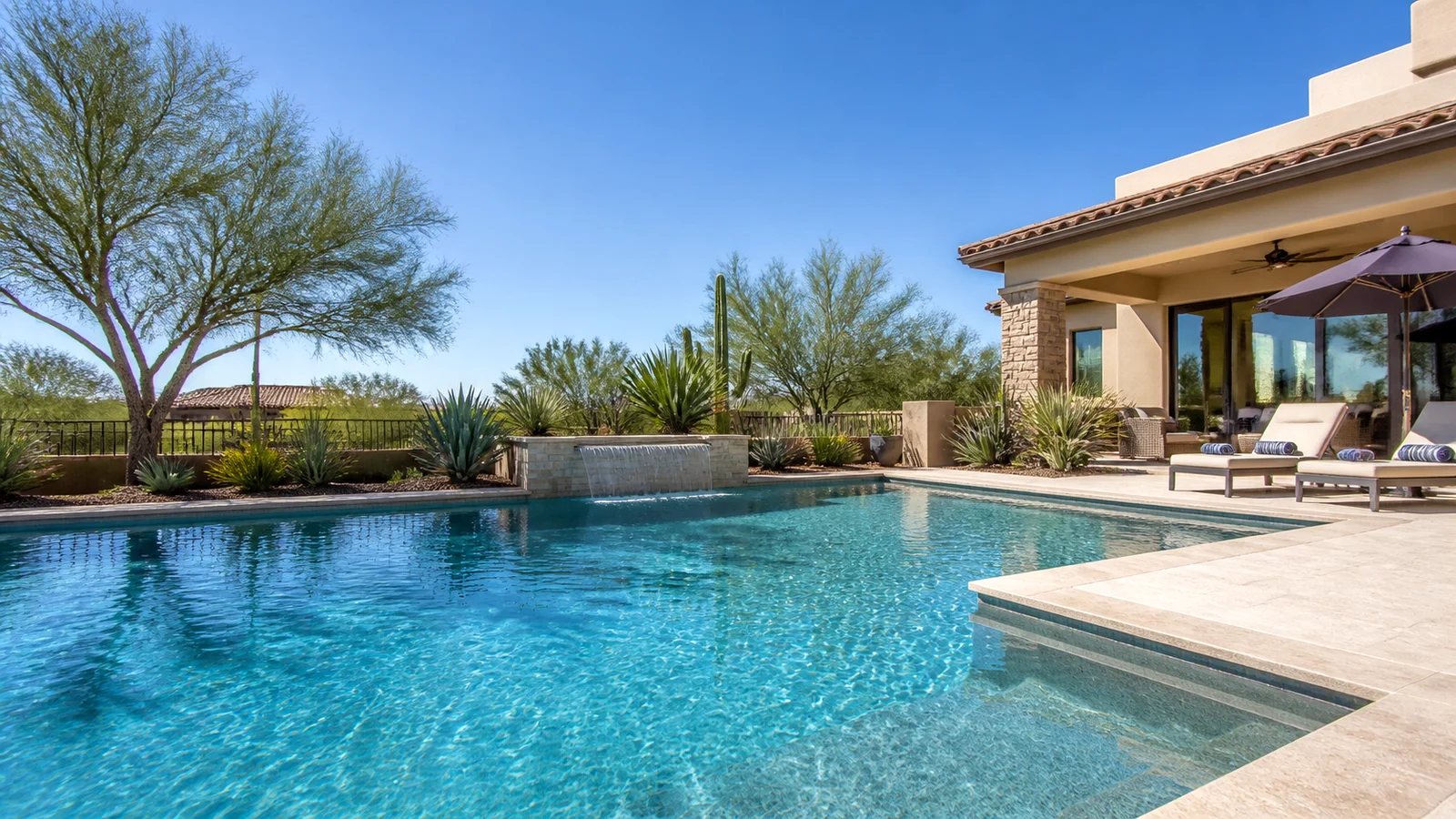
A backyard pool is one of the best ways to beat the Arizona heat. Yet many pool owners notice the same frustrating problems: white crust along the waterline, rough plaster, cloudy water, and equipment that seems to wear out too soon. In most cases, the culprit is the water itself.
Arizona has some of the hardest water in the country, and pools take the brunt of it. The pool care industry has grown to meet challenges like these. There are approximately 78,800 swimming pool cleaning businesses in the United States, according to IBISWorld, and many Arizona homeowners rely on professional help to keep their water and equipment in good shape.
Understanding how hard water affects your pool is the first step toward preventing costly damage. Below, we’ll explain why Arizona water is so hard, what it does to your pool, and how our pool cleaning service helps keep scale and mineral problems under control.
Understanding What Makes Arizona Water Hard
Water hardness refers to the amount of dissolved minerals, mainly calcium and magnesium, in the water. As rivers and groundwater flow through Arizona’s desert soils and rock, they pick up these minerals along the way.
The levels are significant. According to the City of Phoenix, its tap water had a total hardness of 172 to 302 parts per million, or about 10 to 17.6 grains per gallon, and the city notes that these minerals can cause scaling in pipes, water heaters, and fixtures. Many other communities across the state experience similarly hard water.
When you fill or top off your pool with this water, those minerals come along with it. Unlike your home’s plumbing, though, a pool holds thousands of gallons of water exposed to intense sun and heat, which creates ideal conditions for minerals to build up.
Recognizing Scale on Tile and Surfaces
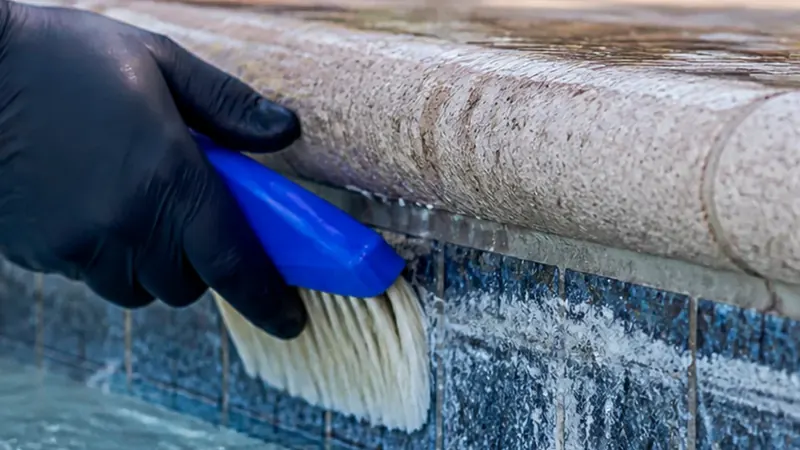
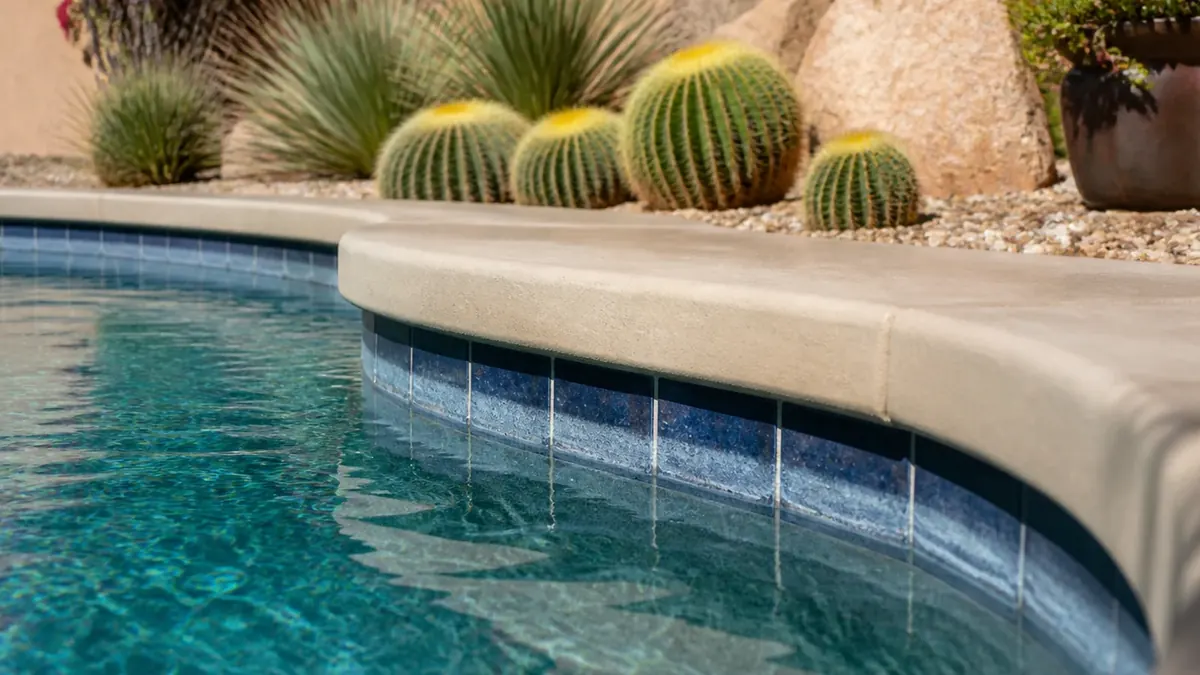
The most visible sign of hard water is scale. Calcium deposits form a white or gray crust along the waterline tile, where water repeatedly evaporates and leaves minerals behind. Over time, this buildup becomes thicker and harder to remove.
Scale can also appear on plaster, pebble finishes, steps, and benches, giving surfaces a rough, chalky texture. Water features, such as sheer descents, fountains, and spillways, are especially prone to buildup because water constantly flows and evaporates across them.
Beyond appearance, heavy scale can damage pool surfaces and trap dirt and algae. Removing advanced calcium buildup often requires specialized cleaning methods, so it’s best handled by professionals who can protect your tile and finish. Addressing scale early through regular brushing and maintenance keeps it from becoming a bigger problem.
Protecting Pool Equipment From Mineral Buildup
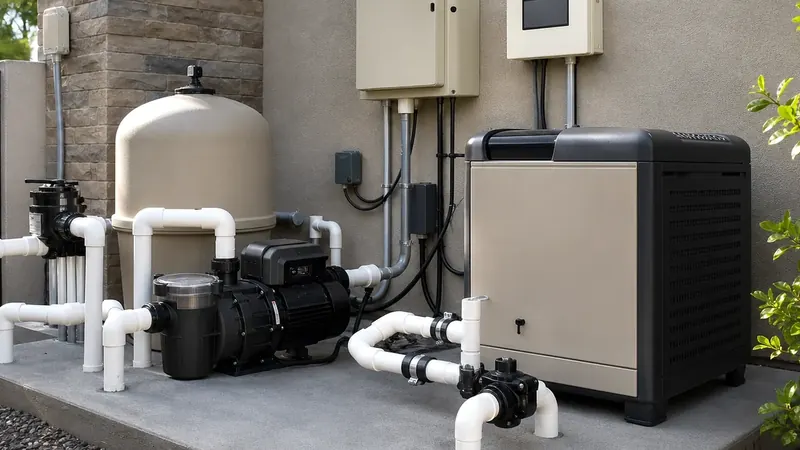
Hard water doesn’t just affect what you can see. Minerals can also build up inside pool equipment, where damage often goes unnoticed until performance drops.
Filters can become clogged with calcium, reducing water flow and forcing the pump to work harder. Heaters are particularly vulnerable, since scale can coat heat exchangers, lowering efficiency and potentially leading to costly repairs. Salt chlorine generators can also develop scale on their cells, which reduces chlorine production and shortens their lifespan.
Routine inspection and cleaning of equipment helps catch mineral buildup before it causes major issues. Our pool cleaning service includes checking filters and equipment so problems can be addressed early, helping your system run more efficiently and last longer.
Managing Cloudy Water and Chemical Balance
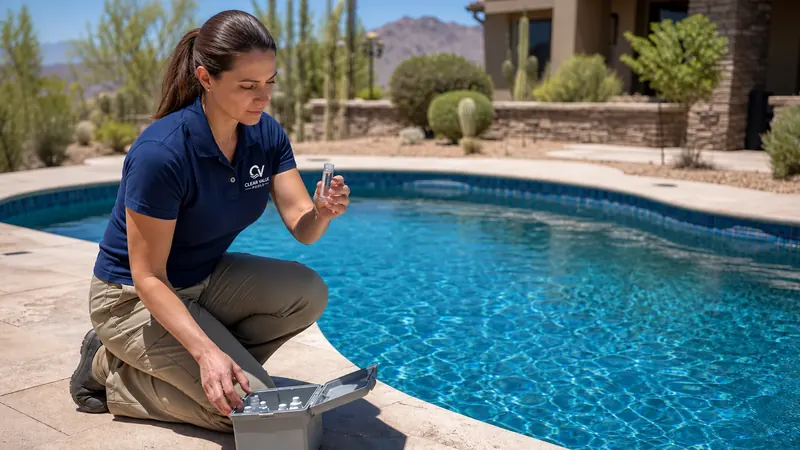
High mineral levels can make pool water appear cloudy or dull, even when it’s properly sanitized. When calcium levels climb too high, minerals can begin coming out of solution, creating a hazy look and contributing to scale formation.
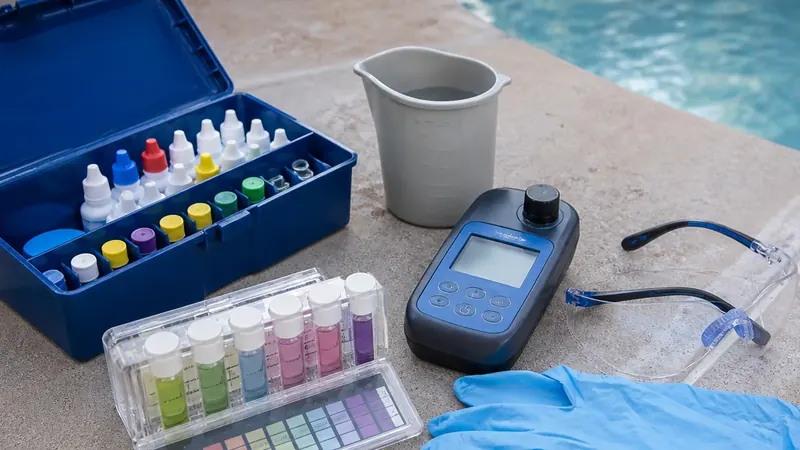
Hard water also affects chemical balance. Water chemistry depends on several factors working together, including pH, alkalinity, and calcium hardness. When these levels drift out of range, the water can become scale-forming, making it more likely to deposit minerals on surfaces and equipment. Chemicals may also be less effective, leading to more frequent adjustments.
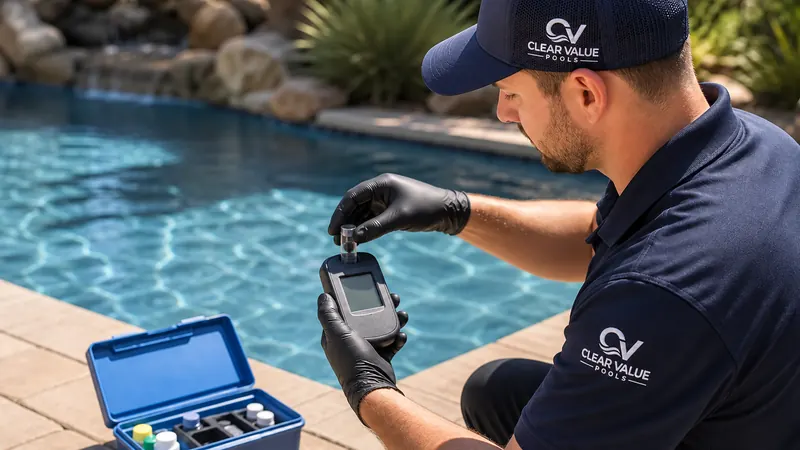
Consistent testing and balancing are essential for managing hard water. A trained technician can monitor these levels and make careful adjustments, helping the water stay clear, comfortable, and less likely to cause scale.
Monitoring Mineral Levels Through Evaporation
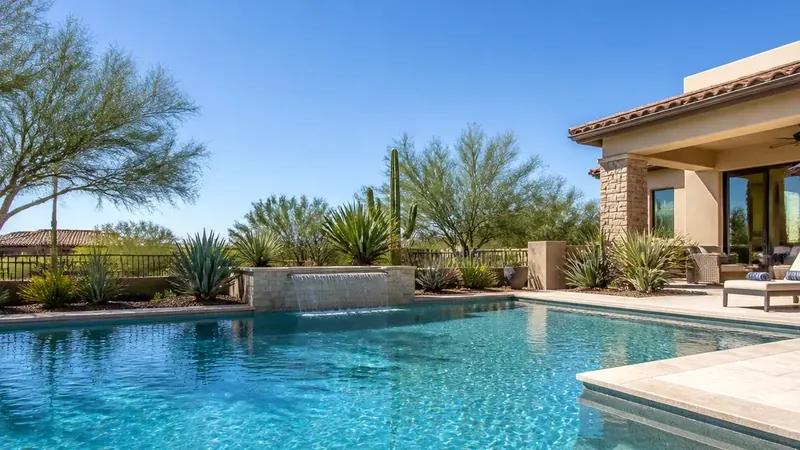
Arizona’s heat and low humidity cause pools to lose water quickly through evaporation, especially during the long summer months. When water evaporates, the minerals stay behind. Each time the pool is refilled with hard tap water, more calcium is added to what’s already there.
Over months and years, this cycle steadily increases the mineral concentration in your pool. Even a well-maintained pool can eventually reach the point where balancing chemicals alone no longer keeps scale under control.
When mineral levels become too high, a partial drain and refill may be recommended to bring them back into a manageable range. Draining a pool in the desert must be done carefully, since exposing plaster to extreme heat can cause damage. Cooler months, like fall and winter, are generally safer times for this kind of work, and it should be handled by experienced professionals.
Preventing Hard Water Damage With Routine Care
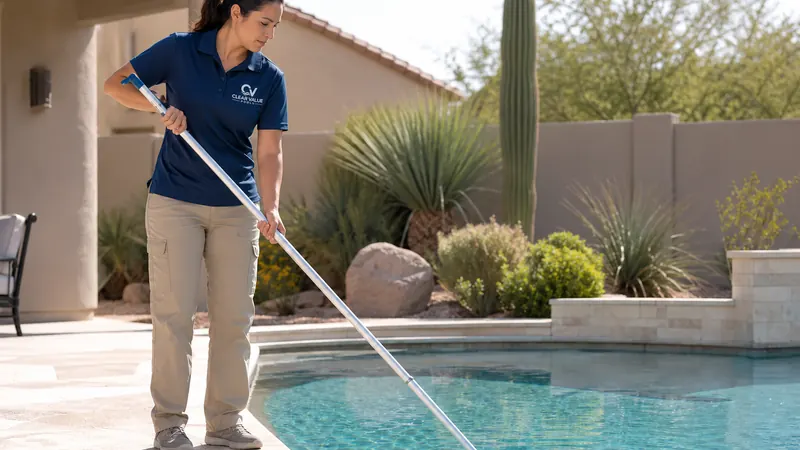
While you can’t change the water that comes from your tap, consistent maintenance makes a significant difference. Regular brushing helps keep calcium from bonding to surfaces, while routine tile cleaning prevents waterline buildup from becoming severe.
Proper chemical balance is the foundation of hard water management. Keeping pH, alkalinity, and calcium hardness in check reduces the water’s tendency to form scale. Regularly cleaning filters and inspecting equipment protects your system from hidden mineral damage.
Scheduled professional service ties it all together. With our pool cleaning service, your pool receives consistent attention, from chemical testing and balancing to brushing, skimming, and equipment checks, so hard water problems are caught early and handled correctly.
Keeping Your Pool Clear With Clear Value Pools

Arizona’s hard water is a constant challenge for pool owners. High calcium and magnesium levels can leave scale on tile and surfaces, clog filters and heaters, cloud the water, and make chemical balance more difficult. Desert evaporation only adds to the problem by concentrating minerals over time.
At Clear Value Pools, we help Arizona homeowners stay ahead of hard water with dependable maintenance tailored to local conditions. Our pool cleaning service includes regular testing, balancing, cleaning, and equipment checks to keep your pool clear, comfortable, and protected. Reach out to us today to schedule service and enjoy a cleaner, better-balanced pool all year long.
Frequently Asked Questions
What does hard water do to a swimming pool?
Hard water can leave white calcium scale on tile and surfaces, clog filters and heaters, cloud the water, and make chemical balance more difficult to maintain. Over time, it can shorten the lifespan of pool equipment.
How do you get rid of calcium buildup on pool tile?
Light buildup can be managed with regular brushing and proper chemical balance. Heavier calcium deposits often require specialized professional cleaning to remove scale without damaging tile or surfaces.
Does Clear Value Pools offer routine pool maintenance?
Yes. Our pool cleaning service includes chemical testing and balancing, brushing, skimming, and equipment checks to help Arizona pools stay clean and protected from hard water damage.
Want dependable weekly pool service?
Sign Up Now